
I found out, and now truly believe, that everyone is different. You really should not judge, compare yourself to others, let alone wishing that you have their lives. Especially because everyone is going through hardships unique to themselves.
This post is about such hardships, one I do not wish upon anyone. Just to get this out of the way: I am not looking for pity, rather, I am writing to help me process, and hopefully spreading some awareness along the way.
And so, along with a little educational post, let me share a life-changing event that happened recently (January through March 2026).
My wife gave birth to a baby girl in early January. A little premature, but healthy nonetheless. We were discharged from the hospital a mere 2 days later.
First signs of trouble appeared in 1-2 weeks. The baby got jaundice, and her stool color was pale. We spent the next few weeks seeing multiple different doctors to figure it out. And finally, at 6-weeks old, she was diagnosed with biliary atresia (BA).
To spare you all the details, she got the life-saving Kasai procedure at 61 days old, and recovered well.
Now let’s switch gears to the educational part.
I casually mentioned biliary atresia, but what is it really? It is a congenital disease (meaning you are born with it) that affects 1 in 8000 babies. So it is rare but not too rare. You are more likely to get accepted to Harvard than have it. But also you are more likely to have BA than finding a four-leaf clover. It has almost the same chance as finding shiny Pokemon.
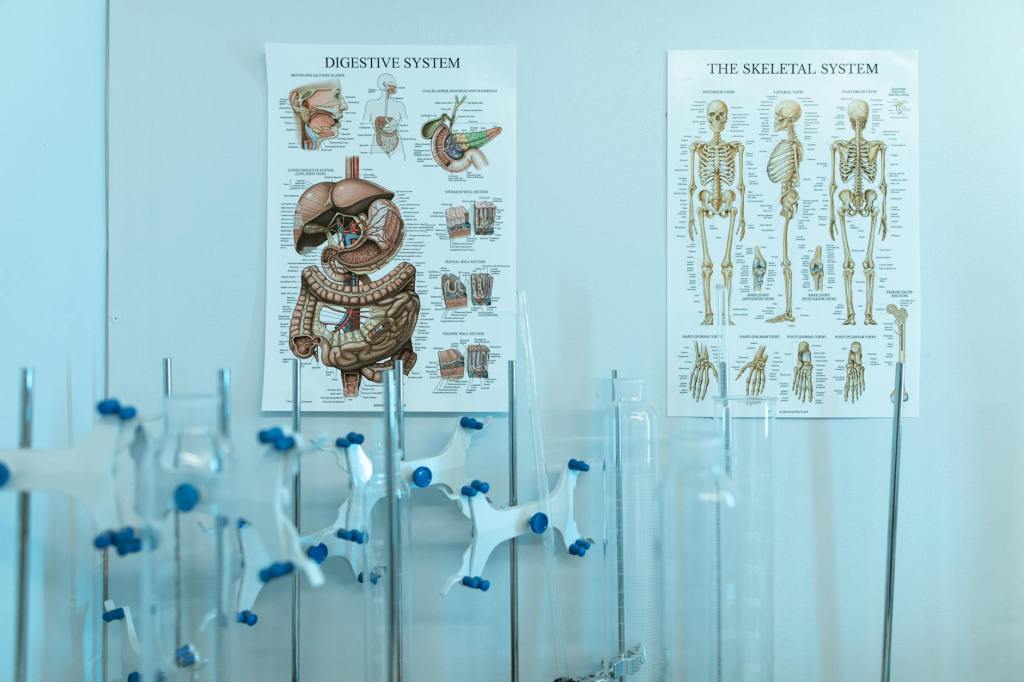
To understand what BA is, let’s take a crash course on human digestive system, especially liver. Our liver is an amazing organ with HUNDREDS of functions. But we are focusing on one.
Bile is a greenish or yellowish brown fluid that our liver produces. It has 2 main functions:
- To breakdown fats we eat into absorbable chunks. Not only that we need to absorb the fats, we also need to absorb vitamin A, D, E, and K that are fat-soluble.
- To eliminate bilirubin, a yellow pigment, byproduct of red blood cells breakdown. If there is enough bilirubin in bloodstream, you can see yellowing of the skin and eyes, which we call Jaundice. Since red blood cells are recycling all the time, jaundice is a good indicator of liver issues. To be clear, jaundice does NOT always mean BA, there are many things that can cause liver issues.
Bile is also why we produce brown or yellow stool. But we are skipping an important delivery mechanism: the gallbladder.
Think of gallbladder as a temporary storage for bile. It pumps bile to small intestine when our body detects fats entering the digestive system. The fats then broken down and absorbed.
Gallbladder is part of a complex plumbing system connected by ducts that is called biliary tree. If one part of the system has problem, bile flow is disrupted. If bile cannot flow out of the liver, it can damage the liver.
So as you’ve probably guessed, biliary atresia is when some or all part of that plumbing is blocked. Depending on which part is blocked, it has different types. However, whichever it is, currently we only have 1 solution: Kasai procedure.
Introduced by Dr. Morio Kasai from Japan, this procedure removes the ducts and gallbladder, and connecting a loop of small intestine directly to the liver. The hope is for the microscopic ducts in the liver can drain bile directly to the intestines.
The reason I mentioned the baby’s age in the story above is because in BA, timing matters. The most effective age for Kasai procedure is before 60-90 days old. Our hospital even will not operate on baby older than 100 days.
So, back to the present. As of writing, it has been 45 days since the operation. The baby is recovering well. But, one more thing.
I have always assumed that with critical diseases, once the major interventions are done, you are back to normal life. But, I learned otherwise. You have a new normal.
It is because the major interventions are not fixing the damage. They are stopping the damage from accumulating further. However, the damage usually is done. Your new normal depends on how bad it is.
Children post-Kasai will have lifelong monitoring of the liver. Kasai is life-saving, but it is a temporary measure. The liver has been damaged. We need to monitor if the damage is worsening. The largest long-term study to date — 1,428 patients in France over 30 years — found that only 41% survive with their native liver at 5 years, 35% at 10 years, 26% at 20 years, and 22% at 30 years. In other words, most BA patients will eventually need a transplant. The question is when. (See this open-access review for a summary.)
The baby’s new normal consists of regular doctor visits, lab tests, antibiotics, and trying our damnedest not to get cholangitis (infection in the bile ducts).
I hope at least you gain some knowledge by reading this. And hopefully someone somewhere saved by your knowledge.
If I can leave one wisdom, it would be “trust the mother’s intuition.” 4 different doctors said the jaundice was normal for the baby. The fifth was gastroenterology specialist who diagnosed correctly.
 anggorodewanto.com
Leave a comment